

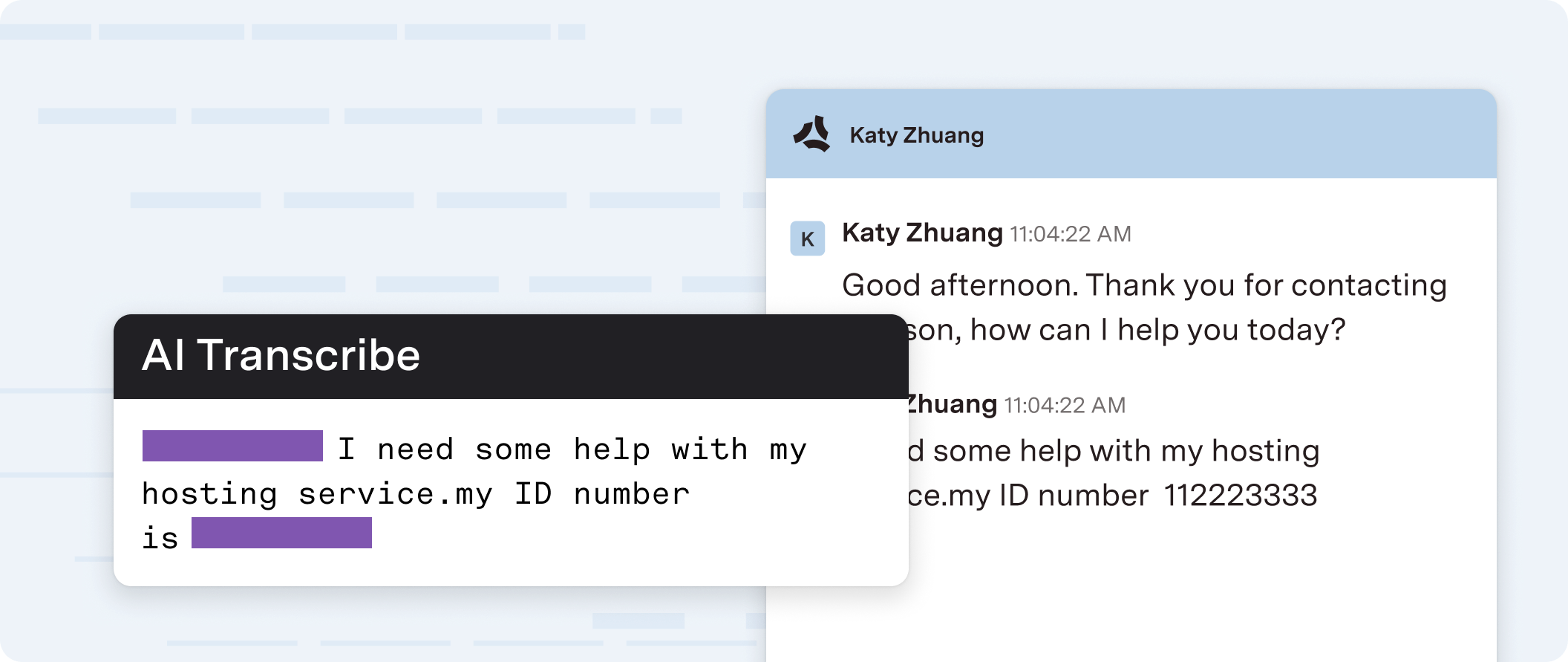
How it Works
A speech recognition model that transforms spoken form to written forms in real-time powers ASAPP’s AI Transcribe service, along with punctuation and capitalization. To optimize performance, you can customize the model to support domain-specific needs by training on historical call audio and adding custom vocabulary to further boost recognition accuracy ASAPP designed AI Transcribe to be fast enough to show an agent what was said immediately after every utterance. You can implement AI Transcribe in three main integration patterns:- WebSocket API: All audio streaming, call signaling, and returned transcripts use a WebSocket API, preceded by an authentication mechanism that uses a REST API.
- SIPREC Media Gateway: The ASAPP media gateway receives audio streaming, and a dedicated API receives call signaling; the system returns transcripts either in real-time or post-call.
- Third-Party CCaaS: A third-party contact center as a service (CCaaS) vendor sends audio to the ASAPP media gateway, and an API sends call signaling; the system returns transcripts either in real-time or post-call.
AI Transcribe Product Guide
Learn more about AI Transcribe in the Product Guide
Get Started
To get started with AI Transcribe, you need to:- Follow the Developer Quickstart to get your API Credentials
- Choose the integration that best fits your use case:
Platform Connectors
Media Gateway: SIPRec
Transcribe audio from your SIPRec system using the ASAPP Media Gateway
Media Gateway: Twilio
Transcribe audio from your Twilio system using the ASAPP Media Gateway
Media Gateway: Amazon Connect
Transcribe audio from your Amazon Connect system using the ASAPP Media Gateway
Media Gateway: Genesys
Transcribe audio from your Genesys system using the ASAPP Media Gateway
Direct Integration
Direct WebSocket
Use a websocket to send audio directly to AI Transcribe and receive the transcriptions
Next Steps
AI Transcribe Product Guide
Learn more about AI Transcribe in the Product Guide
Developer Quickstart
Get started with the Developer Quickstart Guide
Feature Releases
See a list of feature releases for AI Transcribe